Introduction
Choosing the right waterproof bag material is essential for buyers who need durability, weather resistance, and functionality—especially in bulk orders. For B2B procurement professionals, understanding the strengths and applications of each material helps ensure better product sourcing, fewer returns, and stronger end-user satisfaction. In this guide, we break down the most widely used materials in waterproof bags, compare their performance, and help you determine which material best fits your product needs.
Understanding Waterproof Bag Materials
1. What Makes a Material Waterproof?
Waterproof materials prevent water from penetrating through the surface. This is achieved either by the material’s natural properties (e.g., rubberized compounds) or by applying water-resistant coatings. In bag production, manufacturers often combine waterproof fabrics with sealed seams, waterproof zippers, and lamination techniques to ensure complete water protection.
2. Common Waterproof Bag Materials (Comparison Table)
| Material | Water Resistance | Durability | Weight | Common Use Cases |
| PVC (Polyvinyl Chloride) | Excellent | High | Medium | Dry bags, sports bags |
| TPU (Thermoplastic Polyurethane) | Excellent | High | Light | Premium backpacks, medical bags |
| Nylon with PU Coating | Moderate to High | Moderate | Very Light | Travel pouches, drawstring bags |
| Oxford Fabric with Waterproof Laminate | Moderate | High | Medium | Tool bags, school bags |
| Tarpaulin | Very High | Very High | Heavy | Industrial gear, marine bags |
Material Profiles: Features, Pros & Cons
PVC – Durable and Budget-Friendly
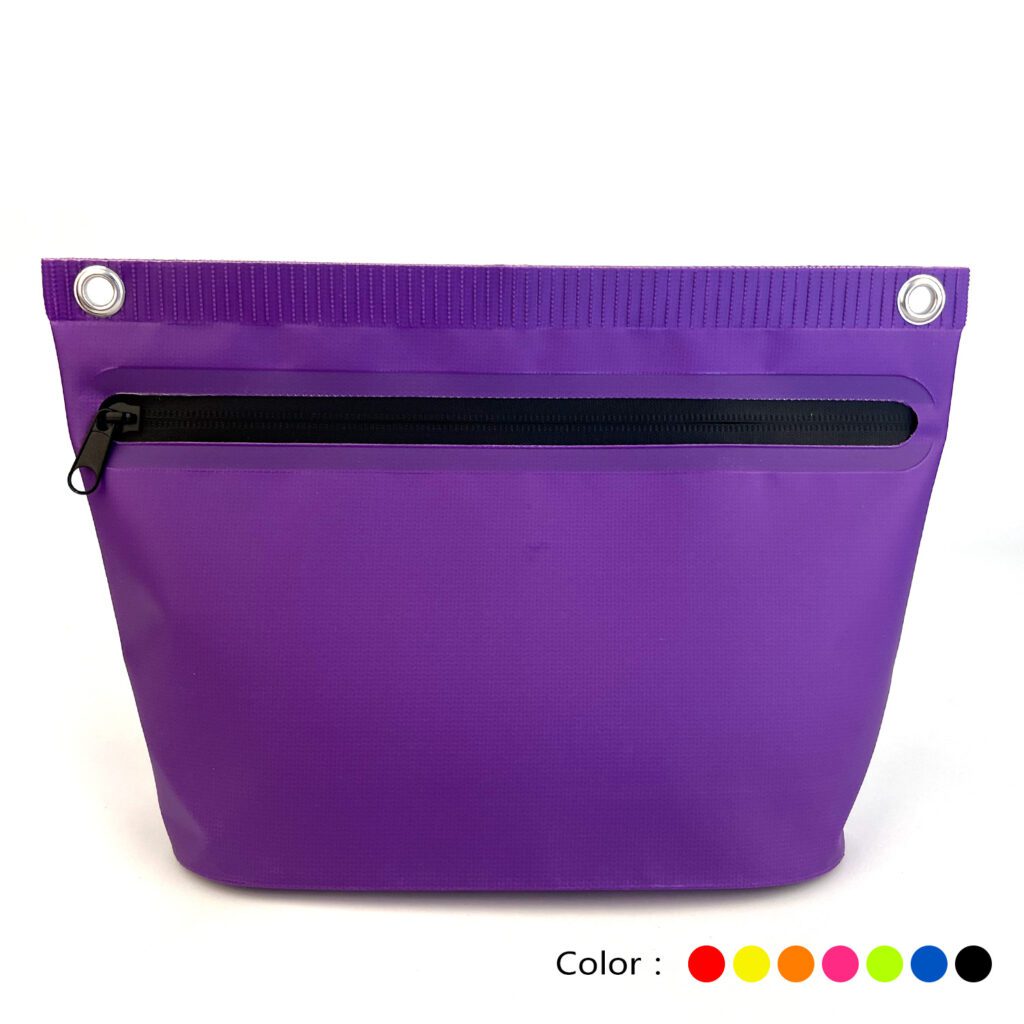
PVC is a popular choice in the mass production of waterproof bags due to its excellent water resistance and affordability. It’s ideal for wholesale buyers looking for cost-effective protection.
Pros: Inexpensive, easy to weld/seal, solid structure
Cons: Heavier than TPU, not eco-friendly
Best for: Promotional waterproof bags, bulk dry bags for outdoor use
TPU – Lightweight and Eco-Conscious
TPU offers superior flexibility and toughness while being more environmentally friendly than PVC. Though more expensive, it’s a go-to for premium lines.
Pros: Lightweight, flexible, abrasion-resistant
Cons: Higher cost, limited suppliers
Best for: Medical kits, hydration packs, high-end waterproof backpacks
Coated Nylon – Lightweight and Versatile
Nylon with PU or silicone coatings provides water resistance while keeping bags ultra-light. However, long-term exposure to heavy rain can compromise performance.
Pros: Lightweight, affordable, versatile
Cons: Lower long-term waterproof performance
Best for: Cosmetic bags, shoe bags, drawstring bags
Oxford Fabric with Laminate – Strong and Stylish
Oxford fabric combined with a laminated layer offers water resistance and strong structural support. It’s frequently chosen for school or tool bags that require both durability and style.
Pros: Customizable textures, durable, affordable
Cons: Mid-level waterproofing unless fully sealed
Best for: Kids’ backpacks, multifunctional storage bags
Tarpaulin – Heavy-Duty for Harsh Conditions
Tarpaulin is made from heavy-duty woven polyester with a waterproof coating. It’s often used in industrial or outdoor gear bags that need maximum protection.
Pros: Extremely durable, completely waterproof
Cons: Bulky, heavier than alternatives
Best for: Industrial storage, delivery bags, marine transport
How to Choose the Right Waterproof Material for Your Business
Consider Your Market and End-User Needs
Retail or wholesale? If you’re targeting retail resellers, premium materials like TPU may add brand value. For bulk promotions or giveaways, PVC or coated nylon is more cost-effective.
What’s the environment of use? Travel, sports, marine, or medical use all have different requirements.
Eco-sensitivity: More brands now ask about sustainable waterproof materials, so knowing your options (e.g., TPU over PVC) gives you a market edge.
Evaluate Cost vs. Performance
TPU performs better long-term but costs more, while PVC is economical but heavier. Choose based on the balance between function, budget, and positioning.
Partner with the Right Manufacturer
Reliable waterproof bag manufacturers offer flexibility in materials, provide quality assurance, and support testing standards like IPX waterproof ratings or REACH compliance for material safety.
Conclusion
Selecting the right waterproof bag material isn’t just about water resistance. It’s about aligning your choice with end-use scenarios, production budgets, durability expectations, and sustainability goals. By understanding material pros and cons, you can make informed decisions that reduce costs, enhance product quality, and strengthen customer satisfaction.
CTA: Let’s Build Your Waterproof Bag Line Together
Looking to develop a new waterproof bag collection? At Camei, we help B2B buyers source and customize the best waterproof bag solutions—whether you’re looking for high-volume, eco-friendly, or technical-performance products.
👉 Contact us today to request a quote or sample.