The First Touch of Minor Snow
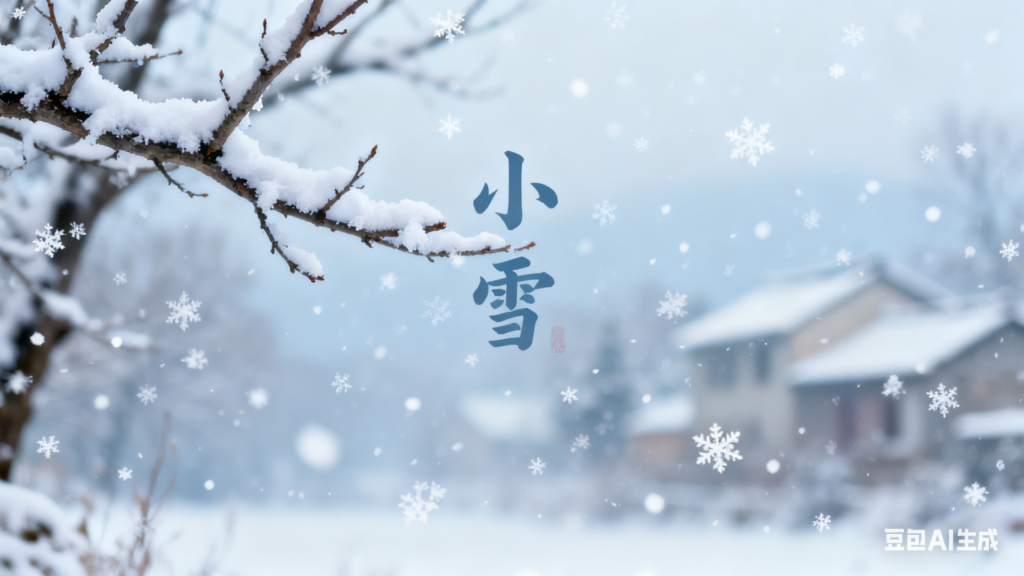
“When Minor Snow arrives, the cold grows and snow is on its way. Yet the ground is not cold enough, and the snowfall is still light.”
When the sun reaches the celestial longitude of 240°, Minor Snow quietly steps into the world with a crisp chill. Morning winds become sharper, sweeping away autumn’s lingering warmth. A thin veil covers the sky, the sunlight grows soft and pale, phoenix-tree leaves flutter down, and sparrows tuck in their feathers to hop about. A gentle silence rises between heaven and earth — winter’s prelude begins.
Understanding Minor Snow
1. Origin of the Solar Term
Falling between November 22 and 23, Minor Snow marks the true beginning of mid-winter. As recorded in The Seventy-Two Seasonal Divisions,
“During the tenth lunar month, rainfall condenses under the cold and turns into snow. ‘Minor’ refers to snow that is not yet heavy.”
This reveals the core characteristic of the season: temperatures are cold enough to turn rain into snow, but the ground has not frozen deeply, so snowflakes melt upon landing and rarely accumulate. Unlike Major Snow, which blankets the world, Minor Snow is more like winter’s messenger — arriving gently to remind all beings to prepare for rest and hibernation.
2. Climate Features: A Portrait of ‘Warm South, Cold North’
Due to China’s vast geography, the climate during Minor Snow differs greatly from north to south:
-
Northern China
Cold air masses strengthen, with temperatures often dropping below freezing. Northern China welcomes its first snow, soft as drifting willow catkins. The Northeast grows even colder as the soil freezes and rivers glaze over with ice — the land seems to pause. -
Southern China
Though snow is rare, coldness seeps into the air. Morning frost appears on branches and grass. Regions along the Yangtze River officially enter winter, and people layer themselves against the deepening chill.
Nationwide, cold fronts move south more frequently, rainfall decreases significantly, and even southern rain carries a sharp, icy sting.
3. The Three Natural Phenomena of Minor Snow
Ancient Chinese observers summarized the season’s natural changes into “Three Waitings,” each revealing the rhythm of nature:
-
Rainbows Disappear
Temperatures drop, moisture condenses into frost and snow, and humidity becomes too low for rainbows to form. -
Heavenly Qi Rises, Earthly Qi Falls
Yang energy rises while Yin energy sinks, leaving the sky high and clear, and the ground cold and still. -
All Becomes Closed, and Winter Forms
With Yin and Yang no longer interacting, life retreats into dormancy. Rivers freeze, soil hardens, and the world slips fully into winter.
The Poetry of Minor Snow
Literati throughout history captured the quiet beauty of Minor Snow:
-
Yuan Zhen wrote, “Do not wonder why the rainbow vanishes — it is now the time of Minor Snow,” noting the seasonal shift.
-
Dai Shulun described its elegance: “The falling snow dances freely in the wind, never tiresome to behold.”
-
Lu You reflected on time and temperature: “After days of rain since Double Ninth, clear cold arrives before Minor Snow.”
Through these verses, the charm of Minor Snow flows from ancient times into today.
Traditions Across Regions
1. Northern China: Pickling for Winter
In the north, Minor Snow is the traditional time to pickle vegetables.
Dry, cold weather is perfect for preserving mustard greens, cabbage, and more. After washing, sun-drying, salting, packing, and fermenting, the crisp and tangy “winter provisions” become a cherished flavor of the season.
2. Southern China: Rice Cakes, Dried Fish & Preparing for the New Year
Southern customs vary widely:
-
Some regions pound glutinous rice cakes for warmth and celebration.
-
Coastal areas sun-dry salted fish, locking in the sea’s winter flavor.
-
The Tujia people slaughter pigs and cook “paotang”, gathering friends and family in a lively pre-New Year feast.
Winter Nourishment During Minor Snow
1. Wellness Principle: Nourish and Preserve
After Minor Snow, the body enters a stage of conserving energy. Diet should emphasize warmth, nourishment, and kidney health:
-
Recommended Foods: lamb, beef, crucian carp, black rice, black beans
-
Best Vegetable Pairings: cabbage, radish for vitamins and balancing
-
Suggested Dishes:
-
Clear lamb soup
-
Crucian carp tofu soup
-
Black rice and red date porridge
-
These dishes warm the body without causing dryness — ideal for early winter.
Blessings for Winter
As winter deepens, may warmth accompany you through the season.
CAMEI wishes you peace and well-being this Minor Snow.